Published
Steep steps, warungs on the rocks and a wave that draws a crowd of watchers. How to spend a whole day at Bingin without rushing it.
Bingin is fifteen minutes from our gate, and the last part of the journey is on foot. You leave the scooter at the top, pay the parking, and take the steps down through a gap between the cliff houses. They are steep and uneven, and they get narrow where two people have to pass. That descent is why the beach still feels like a discovery, and it is also why you should carry less than you think you need.
At low tide the sand opens up and a shelf of reef comes clear of the water. That is the hour to walk the length of the bay, out towards the point and back. As the tide fills the beach shrinks fast, so keep an eye on where you left your things. Swimming here is not the point. The reef sits shallow and sharp, and the wave breaks straight onto it.
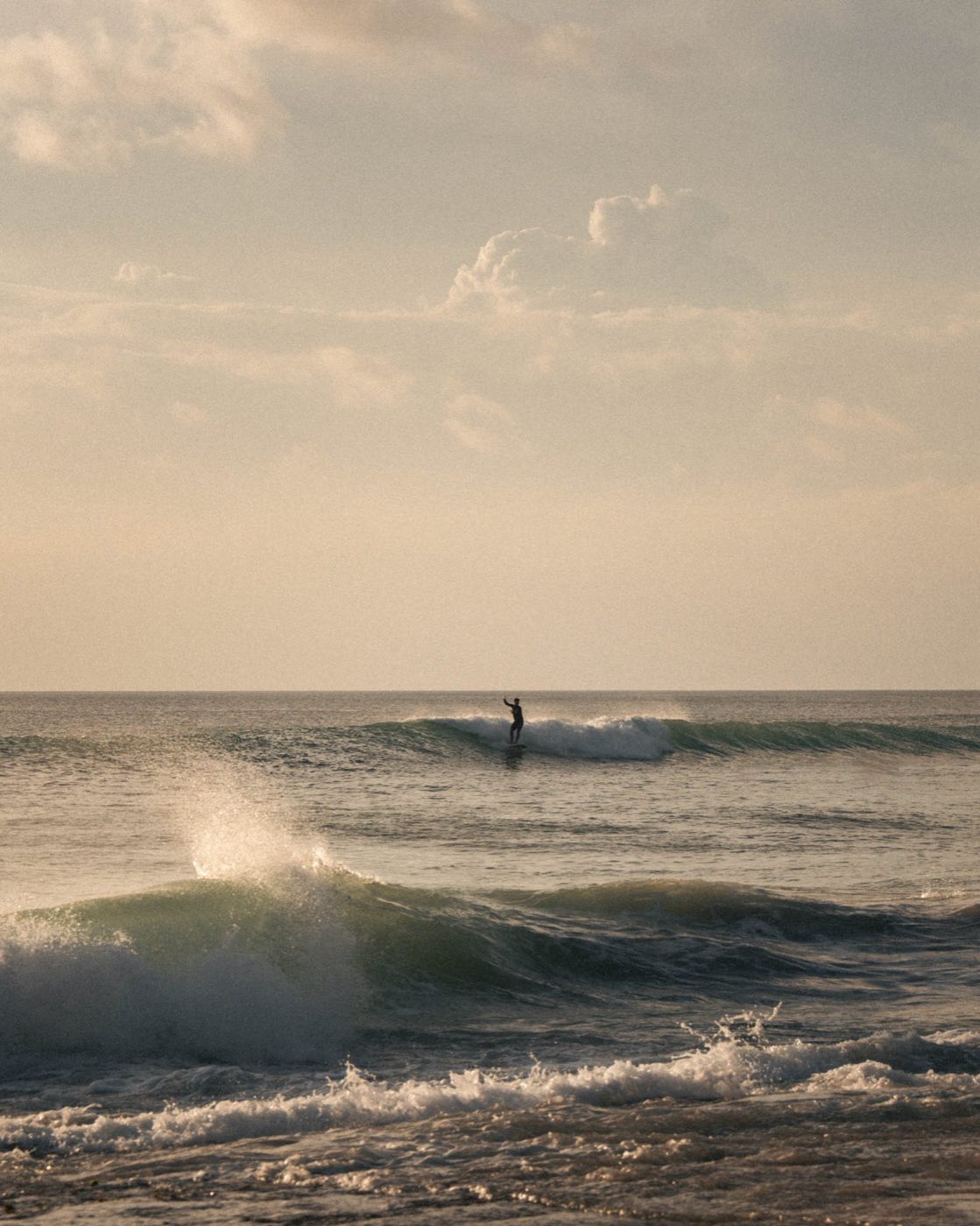
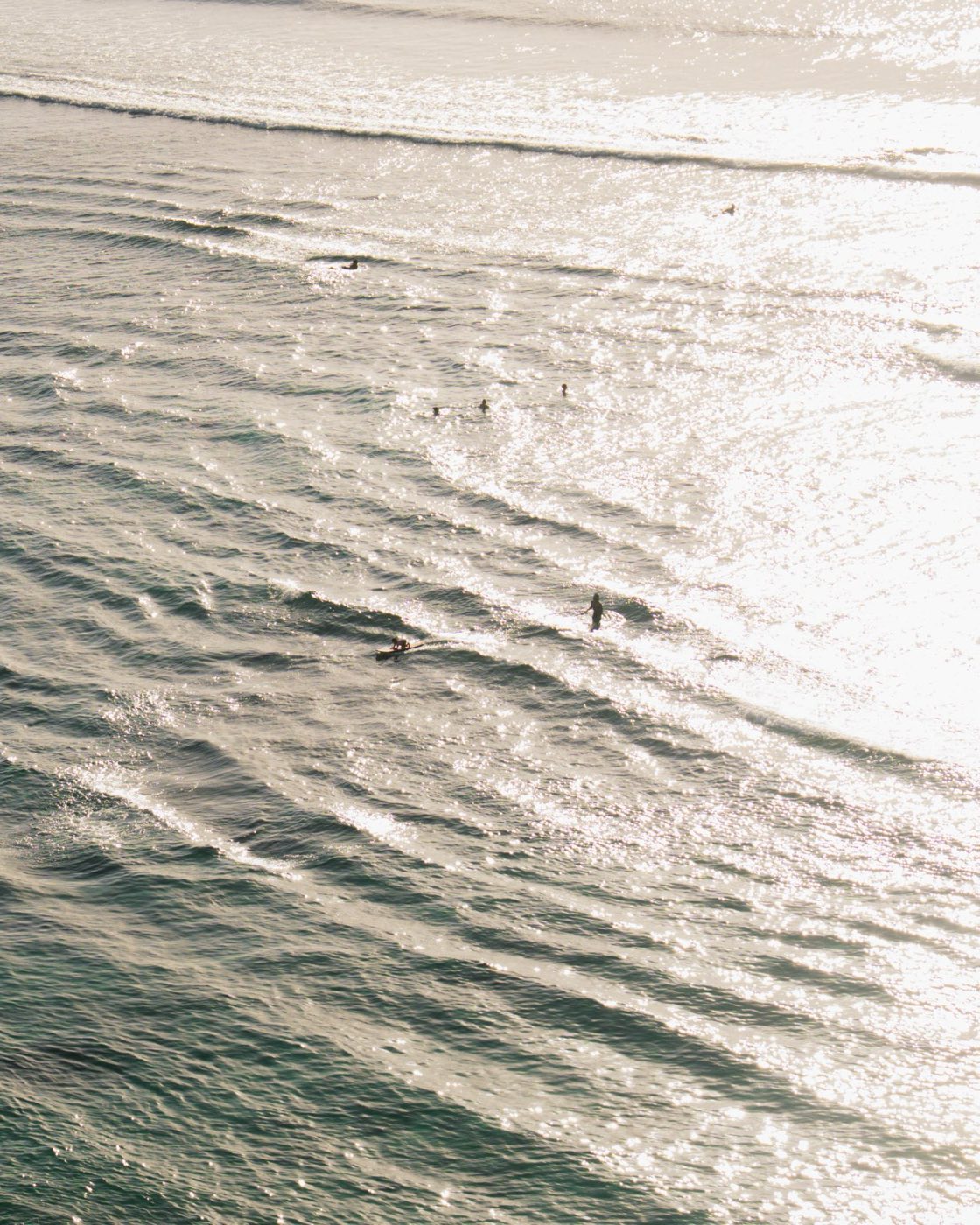
The wave is the reason most people come. Bingin is punchy, fast and photogenic, and it works best when the swell lines up cleanly. If you are not surfing it, the watching is half the pleasure. Find a spot on the rocks and you will see the whole lineup below you, the paddle-outs, the sets stacking on the horizon, the takeoffs that come to nothing.
Breakfast and lunch happen at the warungs built into the rocks and the cliff cafés above them. They are simple places with long views, and they are used to people sitting over one coffee for an hour. Bring cash. Towards dusk the grills come out and the fish goes on, which is the version of Bingin most people remember.
If you want the sunset with a crowd around it, Single Fin is fifteen minutes away and busy from late afternoon, so go early or leave before the rush. If you would rather stay quiet, Padang Padang is ten minutes north and Thomas Beach twelve, both gentler in the water. Ask us at breakfast which way the swell is running and we will point you at the right one.